Wednesday, February 24, 2010

China Mulls Amendment to State Secret Laws

2

Psssst....I've got a secret to tell you.

The standing committee of the 11th National People's Congress (NPC) on Wednesday deliberated a draft amendment to the state secrets law. The draft specifies a definition for state secrets: information that concerns state security and interests that if leaked would damage state security and interests in the areas of politics, economy and national defense. An NPC Law committee member qualified secrets: state, work and commercial. The existing law which took effect in 1989, stated that information concerning major state policies and decisions, armed forces and diplomatic events, national economic and social development, science and technology, and acts safeguarding national security and criminal investigation, among other items, were state secrets. According to the NPC this draft raises citizens awareness of the importance of guarding state secrets and that original range of what a secret was was too broad. This draft makes it clear that these secrets must be protected and should be protected and "any act threatening the security of a state secret must be punished by law." The time limit for keeping secrets should be no more than 30 years old. Entities and companies entrusted should be subject to security scrutiny. Lawmakers will review the law and deliberations will begin soon.

http://www.china.org.cn/china/2010-02/24/content_19467397.htm

Dumping Could Lead to Domino Effect

1


China could reduce its holdings of dollar assets because the country is concerned about the stability of the US economy. China's foreign exchange reserves add up to nearly $2.4 trillion by the end of 2009. Almost 70% of these reserves are dollar assets, according to various estimates.
However, if China was to dump its dollar assets, it could lead to a domino effect on other investors and consequently cause a depreciation of the rest of China's holdings. The country's total number of total US treasury securities declined to 20.9% from 23% in 2009. Sun Lijian state that, "While it is not clear that the selling is part of a consistent strategy, the country should keep a considerable proportion of dollar assets in its foreign echange reserves". There are many suggestions that China should use its growing reserves to buy resources, and technologies. The most important thing for China right now is to protect its financial stability.


Tainted Milk-Spoiler Alert

2

http://www.chinadaily.com.cn/china/2010-02/24/content_9492174.htm

After a the massive country wide food safety scandal two years ago, when hundreds of thousands of children became ill due to contaminated infant formula, concerns have been risen again over the safety of consuming milk. According to recent research, one in ten children have been found to still show signs of kidney damage six months afterward. "Researchers from Peking University studying ultrasound images of infants who fell ill in the 2008 contamination found that while most children in a rural Chinese area fully recovered, about 12 percent still showed kidney abnormalities six months later." Parents have expressed worries about long term health and medical expenses, especially since local hospitals are paying little to no attention to the problem at hand. Many people are looking to the government to create a treatment plan so that sick children like his son will be "insured" in case of any future health problems related to the tainted milk.

This is obviously a serious problem for the future health of China, but I can't help but wonder if there is also a correlation to the lactose intolerance history of the Asian ethnic group.

Tuesday, February 23, 2010

Fewer Chinese children available for adoption in US

2
In china, a great decrease of the ammount of children that become adopted in the USA has been noticed, many ask the question as to why. Adoptions in the U.S have decreased since 2005, when it was around 8000 a year compared to 3000 last year. the number of adopted children has drecreased since more chinese parents are adopting in china and the rate of abandoned kids has decreased dramatically. Yet it is all good becasue the interest of adopting chinese is actually increasing, which leaves for much hope to many abandoned or unwanted children. http//.www.chinadaily.com/

Saturday, February 20, 2010

Dalai meeting interferes in internal affairs: Experts

2
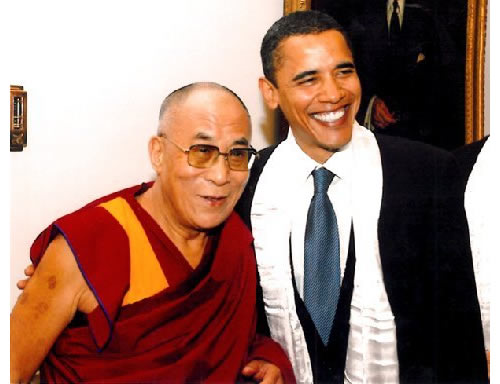
Last thursday, despite of Chinas opposition, president Obama met with the Dalai Lama. the chinese did not wasnt president Obama to talk to the Dalai lama because they thought that they would be conversing about political issues; Possilby thoses of the idea of Tibets independence. And yet is was important for the Dalai Lama to include political ideas since he is not only a religious leader, but the facto leader of the "government in exile." Now china believes that the U.S violated the norms governing international relations. China said that they would like foreign nations away from private matters such as Tibets independence.

Wednesday, February 17, 2010

I wish China looked like this

All That Glitters is Not Gold

2

On Monday, Shen Xue and Zhao Hongbo won the first ever Olympic gold medal for China in figure skating. Pang Qing adn Tong Jian also won the silver medal in figure skating, gaining a second medal for China in one event. Shen and Zhao was the first couple to win three medals in a row during consecutive Olympic Games. China's couples wound up in first and second place, with the Americans not even placing in the top seven. This is a huge win for China, especially since the US did not do well in the figure skating event. This win has instilled even more national pride for their country.

Japan and China Dicuss Food Safety

0
Dumpling Incident of '08 Sparks Talks

China and Japan are negotiating new draft food safety that would allow Japanese officials to enter Chinese factories for safety inspections. When tainted food from China enters Japan, Japanese officials would be allowed to investigate the factory. The safety of food made in China has been a concern to the Japanese since the toxic dumpling incident of 2008. Traces of methamidophos, an insecticide, were found in some Chinese-made dumpling and made 10 people ill. China said it was unlikely that the dumplings were contaminated in China, but Japan asked for further investigation. The two countries agreed in a summit last November to improve food safety between the two countries. There is no word if Chinese officials would be allowed into Japanese factories. That move would demonstrate China's openness to Japan, "since the bilateral trade relations mean much to both countries". Once this agreement takes place it could open the door for other such arrangements. I think that this shows that China is truly trying to clean up their practices, which have been under fire in recent years.

http://www.chinadaily.com.cn/china/2010-02/11/content_9459637.htm

The Great Yuan

2


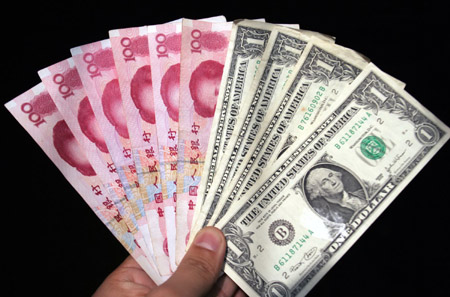
“Something’s brewing." says Goldman chief economist Jim O’Neil about the current currency of Bejing. “I have a strong opinion that they’re close to moving the exchange rate...It could happen anytime.” Economically, there are reasons to move quickly, but politically there are reasons to stay put. Obama says it is crucial for them to "allow their currency to appreciate because, frankly, they have got a potentially overheating economy.” A change in currency policy now would be a big win for Obama – and might lead people in China and overseas to conclude that putting pressure on Beijing works. So even if a revaluation of the yuan is in China’s interest, it probably isn’t going to happen for a while.


http://images.businessweek.com/ss/07/05/0517_china_money/image/10yuan_1.jpg

Tuesday, February 9, 2010

Happy Chinese New Year!!!!!

1

The year of the Tiger begins on February 14

Chinese Humor

1


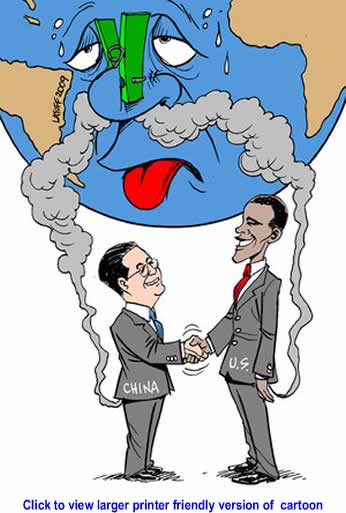
These are some fine examples of political cartoons aimed at some of the controversy in China. While some are more crude than others, they often depict very harsh realities while providing comical relief.

China Concludes Investigation into Bribery Case

2

Every Man Has His Price

Chinese police have finished the investigation into four employees of the Anglo-Australian mining company Rio Tinto, who are in custody on suspicion of illegally obtaining business secrets and taking bribes. The case is now in the hands of the Shanghai People's Procuratorate, who has 45 days to decide whether there is sufficient evidence to take the case to trial. The four employees are Australian citizen Stern Hu (Hu Shitai), who before being detained by Shanghai's security bureau worked as an executive at Rio Tinto's Shanghai Office, and three local employees Liu Caikui, Ge Minqiang and Wang Yong. The statement was made yesterday five months after the arrests were made. According to Chinese law investigations must be wrapped up within two months, but due to special circumstances investigations may be extended up to three months. One of the lawyers representing the defendant says that he is certain that the case will make it to court. The maximum sentence for obtaining business secrets is no more than seven years. I'm not really sure of what the American equivalent of this is so, but seven years feels like not very much for something that was obviously giving this company a leg up.

http://www.eeo.com.cn/ens/Politics/2010/01/12/160443.shtml

Crackdown on kidnap scams nets 17 suspects

1
http://www.ibelieveinadv.com/commons/Kidnap.jpg
Recently, police have arrested 17 men suspected of major child kidnapping organizations. in the past couple of months, concern over kidnappings has increased due to a problem weith scaming. As it turns out, kidnappers are trying to fool the parents of young kids by calling them and demanding money.
Yet, the real problem is wether these kidnappings are real or not. real kidnapings happen often, and their brutality often kills the children. it is a tough choice to make, so most people assume that it is real.
In one of the latest kidnappings, a man named Gu got a phone call from a mysterious man telling him that they had his son. he said that it was so realistic because he heard a child crying in the background. he immediately transfered 50,000 yuan, and later he found out that it was only a scam. He states that the problem is primerily affecting the poor, because they have no money, but are willing to pay to get their child back.

China Issues Guidelines to Limit Death Penalty Use

3

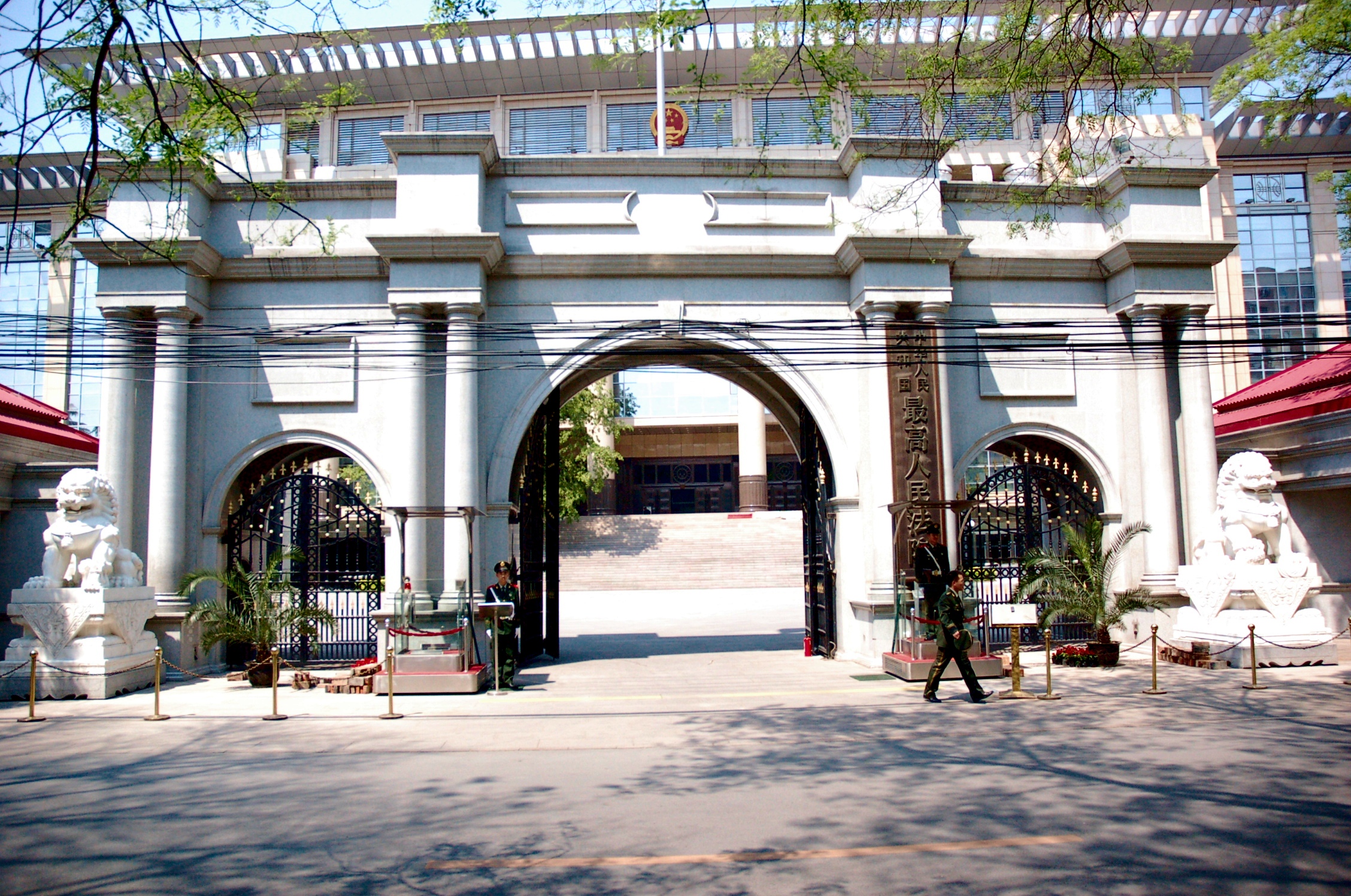
In a meeting on Tuesday in Beijing, the Supreme People's Court created new guidelines concerning criminal cases. It's new policies focus on "justice tempered with mercy" in an effort to limit the use of the death penalty. The guidelines state that the death penalty can be used, but only for a small minority and in cases that have overwhelming evidence. The policy of "justice tempered with mercy" was first introduced into a document dealing with capitol punishment in 2006. The document was approved by the Sixth Plenary Session of the 16th Central Committee of the Communist Party of China. This new policy requires courts to issue severe or lenient sentences depending on the severity of the case being reviewed, according to guidelines the Court has issued. Although the death penalty is still legal, this is a big step in restricting the use of capitol punishment.


North Korea nuclear envoy visits China, talks closer

2
http://news.yahoo.com/s/nm/20100209/wl_nm/us_korea_north_8


A border security soldier of South Korea checks a bus carrying a South Korean delegation at the CIQ (customs, immigration and quarantine) office, just south of the demilitarized zone separating the two Koreas, in Paju, north of Seoul February 8, 2010. REUTERS/Lee Jae-Won


North Korea's top nuclear envoy found themselves in Beijing on Tuesday. Pyongyang said it was willing to step up talks with China on the previously stalled disarmament-for-aid talks. This shift by North Korea happened a day after the North's leader, Kim Jong-il, pledged again to remove nuclear weapons from the peninsula. Analysts say it is unlikely he will ever completely get rid of nuclear arms, which are seen at home as the "crowning achievement" in his military-first rule. The North can win aid to prop up its broken economy at the six-way talks if it reduces the security threat it poses to North Asia, which is responsible for one-sixth of the global economy.

Tuesday, February 2, 2010

Government and Policy Door for talks with Dalai still open:

2

But it's Really Closed

A meeting with the Dalai Lama's envoys lead Chinese officials to say that the door for talks was open, but that there would be no concessions made on the issue of national sovereignty. Du Qinglin, head of the United Front Work Department (UFWD) of the Communist Party of China (CPC) Central Committee, said that Greater Tibet violated China's constitution and only if the Dalai Lama gave up those claims would there be a solid foundation for talks. Du said that China has been consistent in its policy on Tibet and that if the Dalai Lama wanted to make progress he should conform to the times and that his words should reflect his actions. Du says that it is the CPC who can "represent the fundamental interests of all Tibetan people, and can ensure them a happy life" They also reiterated during talks that the Tibetan Government-in-Exile is completely illegal. "We hope the Dalai Lama can envisage reality, and get back on the track of patriotism," said a statement by CPC officials "Only by doing so, can the Dalai Lama have a future." This is a tough stance taken by the Chinese government and shows that they have no intention of backing down.

http://www.chinadaily.com.cn/china/2010-02/01/content_9410106.htm

Chinese Premier Warns of Challenges in Economy

2

The Chinese economy is still very unbalanced, according to the Chinese Premier Wen Jiabao. He stated that until balance is achieved inside and outside of the country, the economy cannot prosper. Even though he has doubts about the economy, Wen Jiabao remains optomistic that China will be able to overcome the challenges it faces and succeed in fixing the economy. The Premier stated that China's international trade market is also hurting the stability of the economy. While presiding over one of many meetings to assess the status of the economy, he commented that China will focus on keeping stable macroeconomic policies while also trying to become more flexible. One of his main goals for this year is to "...realize a democratic and scientific style to decision making". During these meetings, both communist and non-communist representatives from several different fields were present. Premier Wen Jiabao's optomism is not unfounded, since China's economy expanded 8.7% by the end of 2009, exceeding its 8% goal.


http://www.china.org.cn/business/2010-02/02/content_19348262.htm

10-day crackdown on latest milk scare

2

A problem with melamine tainted foods in 2008, which killed 6 and hospitalized over 300,000, has now resurfaced in China. On the verge of another scandal, China launched a 10-day nationwide inspection to find and destroy these products to prevent the contamination of more people. The problem with the melamine infected food began when Chinese food companies began adding melamine (commonly used for the manufacture of plastics and fertilizers) to fool inspectors testing for the protein content. A former chairman of the Guangdong Provincial Dairy Association says that the products involved in the scandal of 2008 were pulled off the shelves "but none of them said the tainted products were ever destroyed."

http://www.chinadaily.com.cn/china/2010-02/02/content_9410731.htm

China's Human Rights Hacking

2

http://online.wsj.com/article/SB10001424052748704722304575038080333488998.html?mod=googlenews_wsj

So much attention has been given to the whole China-Google scandal, but something a little more under the radar has been taking a huge toll on Chinese online activists.For about the last three years, human-rights sites have not been able to operate from within China's censored borders. Now, the government is freezing human rights websites on foriegn browsers, especially during "sensitive times" such as the 20-year anniversary of the Tiananmen Square massacre last June and China's 60th anniversary in October. These "cyber-espionage campaigns" starting in 2003 and have involved hackers systematically infiltrating thousands of computer systems in hundreds of countries.

While this may not seem to be a dangerous threat, it has a huge impact on the voice of China, and acts as a serious silencing mechanism for the government. Should there be a limit to free speech internationally? How can governments regulate foreign internet? When do they cross the line?